

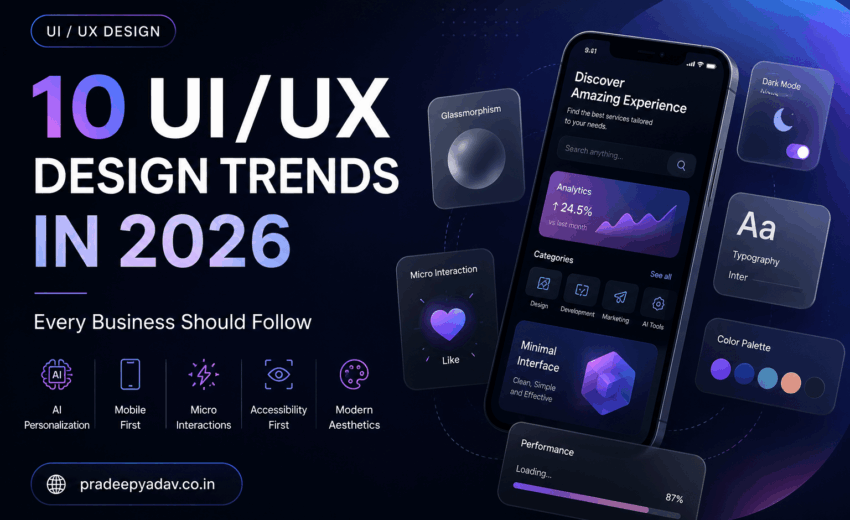
10 UI/UX Design Trends in 2026 Every Business Should Follow
In today’s competitive digital landscape, users decide within seconds whether to stay on a website or leave. A visually appealing interface combined with an intuitive user experience has become essential for businesses aiming to increase engagement, improve customer satisfaction, and drive conversions.
As technology evolves rapidly, design trends continue to shift toward smarter, cleaner, and more user-centric experiences. Here are the top UI/UX design trends that every business should consider in 2026.
1. AI-Powered Personalization
Artificial intelligence is transforming digital experiences. Modern applications now adapt content, recommendations, and layouts based on user behavior, making interactions feel more relevant and personalized.
Businesses that embrace AI-driven personalization often see higher engagement and better customer retention.
2. Minimal Interfaces with Maximum Impact
Clean layouts, generous white space, and clear visual hierarchy remain essential. Instead of overwhelming users with too many elements, modern interfaces prioritize simplicity and clarity.
Minimal design helps users focus on what matters most.
3. Micro Interactions
Small animations like button feedback, loading states, hover effects, and subtle transitions make products feel polished and interactive.
These tiny details significantly improve the overall user experience.
4. Dark Mode Support
Users increasingly expect websites and mobile apps to offer both light and dark themes.
Dark mode reduces eye strain, conserves battery on OLED devices, and provides a premium visual experience.
5. Glassmorphism and Soft UI
Frosted glass effects, translucent cards, subtle gradients, and layered interfaces continue to dominate premium digital products.
When used carefully, these effects add depth without sacrificing usability.
6. Accessibility First
Inclusive design is no longer optional. Businesses should ensure their products are usable by everyone, including people with disabilities.
Key accessibility practices include:
- Proper color contrast
- Keyboard navigation
- Screen reader compatibility
- Clear typography
- Descriptive labels
7. Faster User Flows
Every extra click increases the chance of losing a customer.
Successful products streamline tasks like:
- Proper color contrast
- Keyboard navigation
- Screen reader compatibility
- Clear typography
- Descriptive labels
Reducing friction leads to better conversion rates.
8. Mobile-First Experiences
With the majority of users accessing digital products on smartphones, designing for smaller screens first ensures a seamless experience across all devices.
Responsive design should be a standard practice for every project.
9. Strong Design Systems
A design system improves consistency across products by providing reusable components, typography guidelines, color palettes, and interaction patterns.
It also accelerates collaboration between designers and developers.
10. Data-Driven Design Decisions
Modern UX design relies on analytics, user testing, heatmaps, and customer feedback rather than assumptions.
Businesses that continuously measure and optimize user behavior create products that perform better over time.
Final Thoughts
UI/UX design is no longer just about aesthetics—it directly influences business growth. Investing in user-centered design helps increase customer trust, improve usability, and drive measurable results.
Whether you’re building a startup MVP, redesigning a corporate website, or launching a mobile application, following these trends can help you stay ahead of the competition in 2026.