

UI vs UX Design: What's the Difference? A Complete Beginner's Guide (2026)
If you’ve ever searched for a designer for your website or mobile application, you’ve probably come across the terms UI Design and UX Design. Many people assume they’re the same thing, but they serve different purposes.
Understanding the difference between UI and UX is important for business owners, startups, developers, and aspiring designers. A great-looking product isn’t always easy to use, and an easy-to-use product isn’t always visually appealing. The best digital experiences combine both.
In this guide, we’ll break down UI and UX in simple terms and explain why they matter.
What is UI Design?
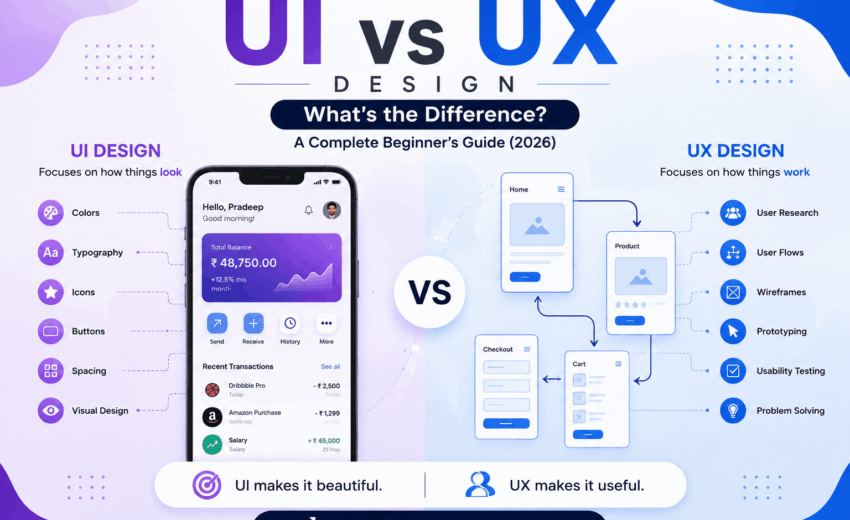
UI (User Interface) Design focuses on the visual appearance of a digital product.
A UI designer creates everything users see on the screen, including:
- Buttons
- Colors
- Typography
- Icons
- Layouts
- Images
- Navigation
- Animations
The goal is to create an attractive and consistent interface that reflects the brand and is easy to interact with.
Example
When you open a banking app, the colors, icons, cards, and buttons are all part of the UI design.
What is UX Design?
UX (User Experience) Design focuses on how users interact with a product.
A UX designer ensures that users can complete their tasks quickly, efficiently, and without confusion.
UX involves:
- User Research
- Personas
- User Flows
- Wireframes
- Information Architecture
- Usability Testing
- Journey Mapping
The goal is to solve user problems while making the experience smooth and enjoyable.
Example
If transferring money in a banking app takes only a few taps and feels intuitive, that’s good UX.
UI vs UX: The Key Differences
| UI Design | UX Design |
|---|---|
| Focuses on appearance | Focuses on experience |
| Creates visual layouts | Solves user problems |
| Uses colors and typography | Uses research and testing |
| Makes products beautiful | Makes products easy to use |
| Concerned with aesthetics | Concerned with usability |
Why Both UI and UX Matter
Imagine buying a luxury car with a stunning design but uncomfortable seats and confusing controls. It looks great but offers a poor experience.
Now imagine a car that’s incredibly comfortable but looks outdated and unattractive.
Neither is ideal.
The best products combine excellent UI with thoughtful UX.
The UI/UX Design Process
A typical design process includes:
- Understanding business goals
- Conducting user research
- Creating user personas
- Building user flows
- Designing wireframes
- Creating high-fidelity UI screens
- Developing interactive prototypes
- Testing with users
- Improving based on feedback
Common Mistakes Businesses Make
Many businesses make these mistakes:
- Prioritizing visuals over usability
- Ignoring user feedback
- Overloading screens with information
- Using inconsistent design styles
- Not optimizing for mobile devices
- Skipping usability testing
Avoiding these mistakes leads to better customer satisfaction and higher conversions.
Popular Tools Used by UI/UX Designers
Some of the most popular tools include:
- Figma
- Adobe XD
- Sketch
- FigJam
- Miro
- Maze
- Hotjar
These tools help designers collaborate, prototype, and test ideas before development begins.
Why Good UI/UX Increases Business Growth
Investing in UI/UX design offers several benefits:
- Higher customer satisfaction
- Increased conversion rates
- Lower development costs
- Better customer retention
- Stronger brand perception
- Improved accessibility
- Reduced support requests
Businesses that prioritize user experience often outperform competitors because customers enjoy using their products.
Final Thoughts
UI and UX are two sides of the same coin. While UI focuses on creating visually appealing interfaces, UX ensures that those interfaces provide a seamless and meaningful experience.
Whether you’re building a website, mobile application, SaaS platform, or eCommerce store, investing in both UI and UX design is essential for long-term success.
If you’re planning your next digital product, don’t think of UI and UX as separate services—they work best together.